
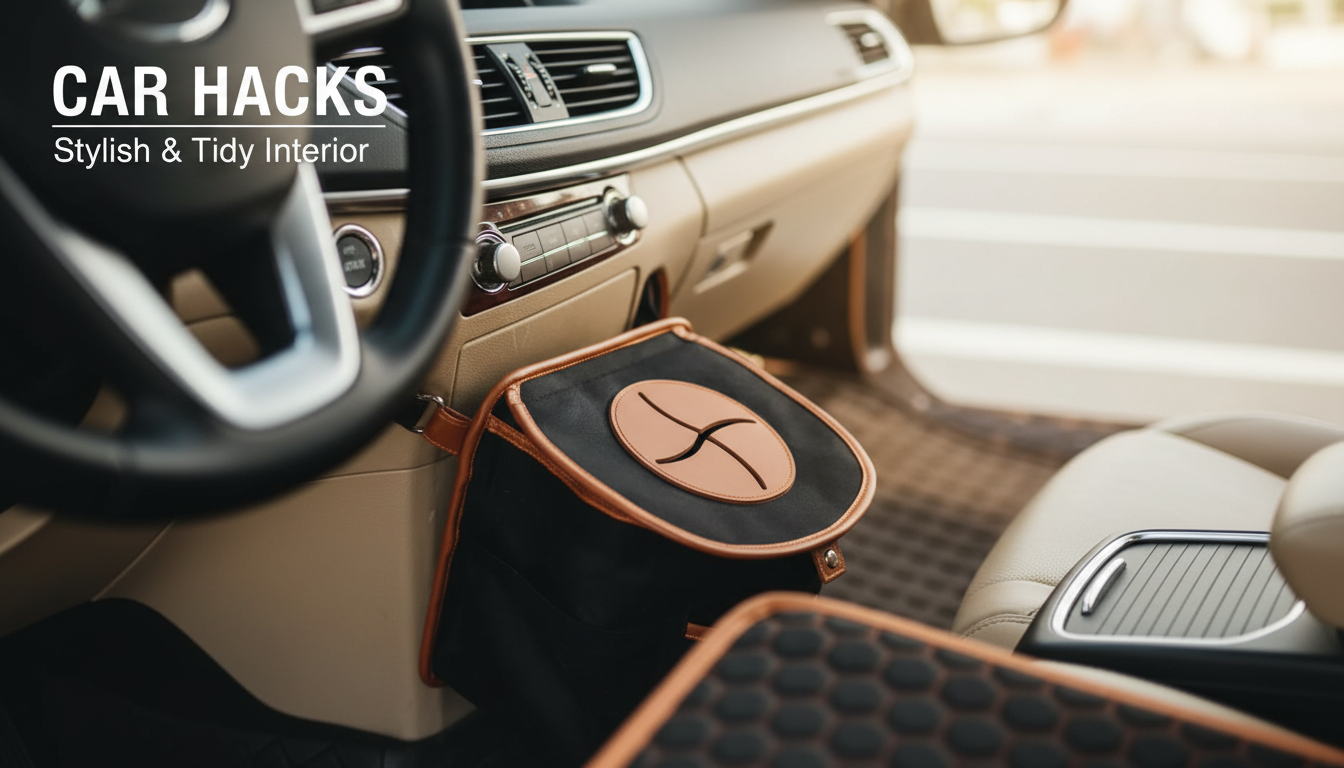
Mess in the car adds up fast—wrappers, receipts, tissues, and the occasional half-finished drink. A spill-proof car trash can helps contain odors and liquids while staying secure during turns, braking, and bumpy roads. Whether it’s a daily commute, a weekend road trip, or a back seat full of kids, the right bin keeps clutter from migrating across seats and floor mats.
“Spill-proof” doesn’t mean you can pour a soda inside and forget about it. It usually means the trash can is designed to resist leaks from small messes and damp trash—think melted ice, cup drips, or a used wipe—without soaking into upholstery.
Placement matters as much as the bin itself. A great trash can in the wrong spot can become a nuisance or a hazard.
For safety, avoid placing any bin where it can interfere with pedals, seat tracks, or airbags.
The best car trash cans are the ones people actually use. Small design details can make tossing trash effortless and cleanup faster.
Choose a design based on how many people ride in the car, how often trash is generated, and whether liquids are a realistic risk. For frequent coffee cups or kids’ sticky snacks, prioritize a sealed or semi-sealed top and a truly waterproof interior.
| Design | Best for | Pros | Trade-offs |
|---|---|---|---|
| Hanging (headrest/seat-back) | Families, rideshare, road trips | Easy access for rear passengers; keeps floor clear | May sway if not tightened; needs strap adjustment |
| Console-side / slim vertical | Daily commuting | Fits tight spaces; easy driver reach | Smaller capacity; can interfere with legroom if oversized |
| Cup-holder style | Light trash only | Super compact; stable in holder | Not ideal for bulky trash; limited spill control |
| Floor bin / mini canister | Bigger capacity needs | Holds more; can use larger bags | Must be anchored to prevent tipping |
Food safety guidance also applies on the road—perishables and leftovers spoil faster when warm, so discard promptly and wash hands when possible. The CDC’s travel food safety basics are a helpful reference: https://www.cdc.gov/foodsafety/keep-food-safe.html.
If you ever need to dispose of items like batteries, certain cleaners, or other potentially hazardous materials found during a car cleanout, follow local guidance. The EPA’s household hazardous waste overview is a good starting point: https://www.epa.gov/hw/household-hazardous-waste-hhw.
If the goal is reducing day-to-day mess while lowering the odds of damp trash reaching your upholstery, a dedicated bin makes the biggest difference. The Spill-Proof Car Trash Can is designed for in-cabin use, with an emphasis on containing everyday debris and helping prevent leaks from small liquid messes.
For drivers who also want a simple way to corral loose receipts, cards, and small essentials (so they don’t end up as “trash by accident”), a compact organizer like the Michael Kors Jet Set Travel Pebbled Leather Wristlet Wallet can help keep the cabin looking less cluttered between cleanouts.
Most are built to resist leaks from small liquid messes like cup drips, melted ice, or a damp wipe, especially when they have a waterproof lining and a secure closure. Open containers should be emptied first, and using a bag liner makes cleanup much easier.
Seat-back hanging placement is typically the most stable and keeps it accessible for passengers, as long as the strap is tightened. Avoid loose floor placement unless it’s anchored, and keep any bin away from pedals and airbag zones.
For daily drivers, emptying every few days is a good baseline, and it should be emptied right after road trips. In hot weather or when food waste is involved, empty it the same day to prevent odors from building.







Leave a comment