
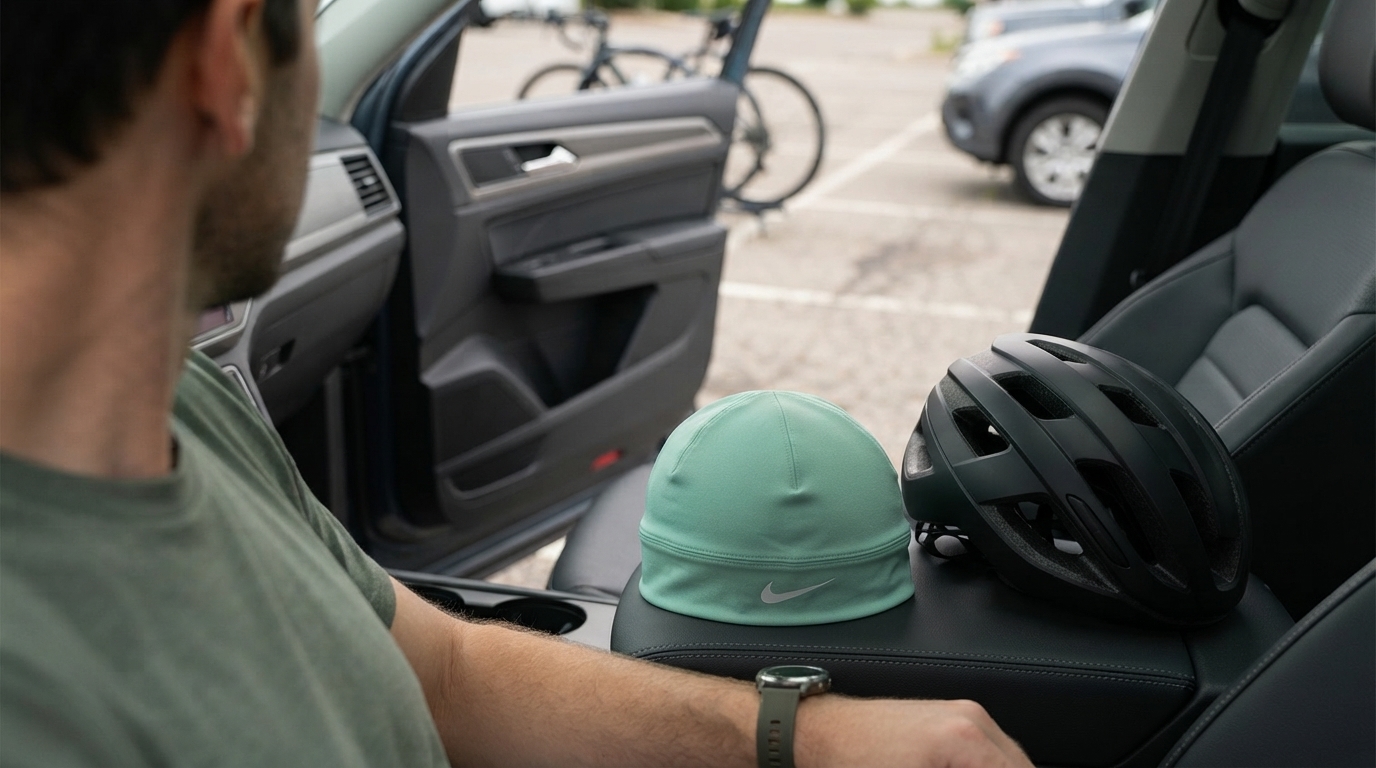
Yes—Nike skull caps are commonly worn under helmets for warmth, sweat control, and a smoother fit than a bulky beanie. The key is choosing a thin, low-profile cap that won’t change how your helmet sits or fastens.
A helmet is designed to protect only when it fits correctly. A skull cap can be a helpful layer, but it should never compromise fit, stability, or visibility. Aim for a snug cap that lays flat from forehead to the base of the skull, with no thick seams or extra fabric bunching at the crown.
Put on your helmet without the skull cap and confirm it fits properly (no rocking, no pressure points, and the straps buckle comfortably). Then add the skull cap and repeat the test. If the helmet feels tighter, sits higher, shifts when you shake your head, or the straps no longer lie correctly, the cap is too thick or the helmet is too small for layering.
For cycling, skiing, snowboarding, and other high-output activities, a sweat-wicking Nike skull cap can reduce sweat drip and help prevent helmet padding from getting saturated. In cold weather, it can also add a bit of insulation without the “stuffed” feeling that comes from thicker hats.
Steer clear of caps with knots, large logos, rigid brims, or thick fleece that could alter impact management. Also avoid covering ear areas if your helmet relies on clear hearing or if it affects how goggles and straps seal.
For a deeper breakdown of fit, use cases, and what to watch for with different helmet types, read the main guide here: https://fashiongrotto.com/can-nike-skull-caps-be-worn-under-helmets/.
They can. A thin, compression-style skull cap usually has minimal effect, but thicker fabric or bulky seams may make the helmet feel tight, sit higher, or shift—signs you should switch to a slimmer cap or adjust sizing.






Leave a comment