
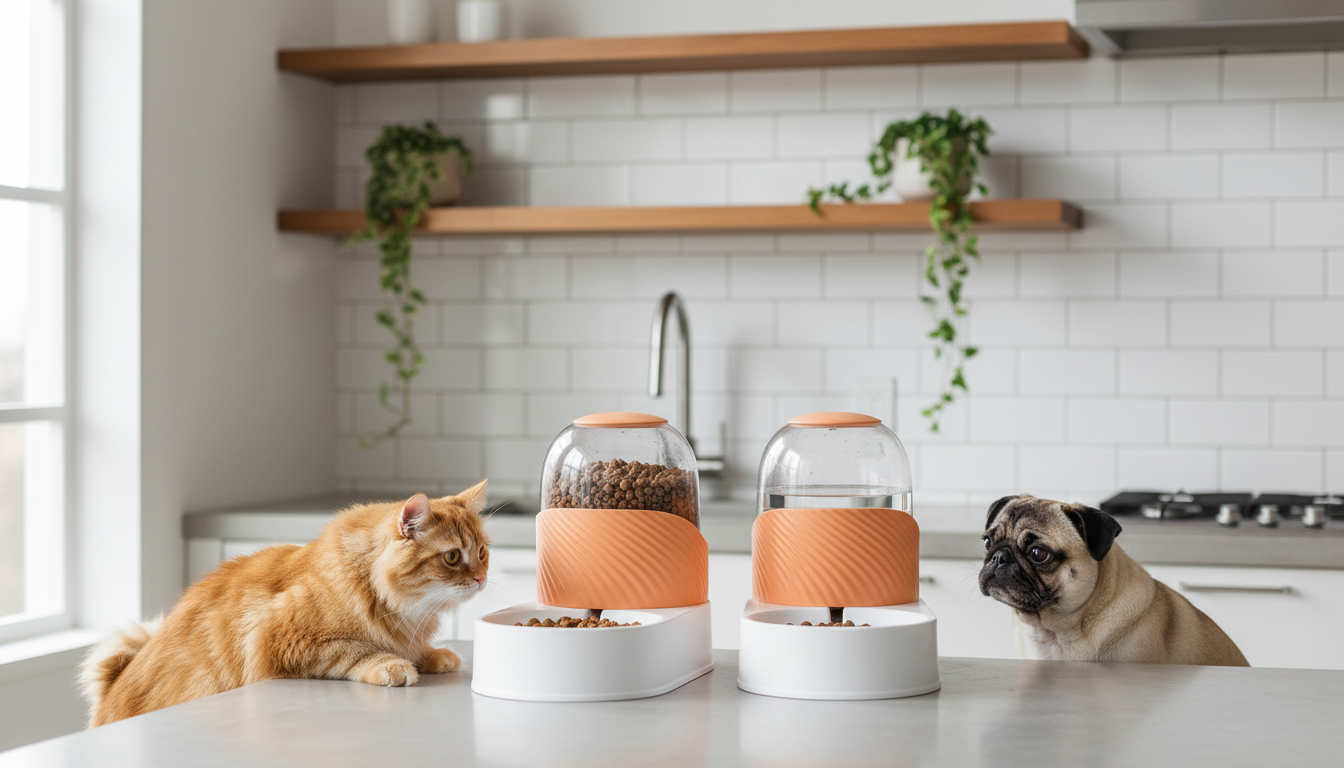
Keeping bowls topped up can be a daily hassle—especially with busy schedules, short trips, or pets that prefer steady access to food and fresh water. A dual automatic feeder with a large reservoir helps maintain consistent availability while reducing refills and mess, making it easier to support everyday routines for cats and small-to-medium dogs.
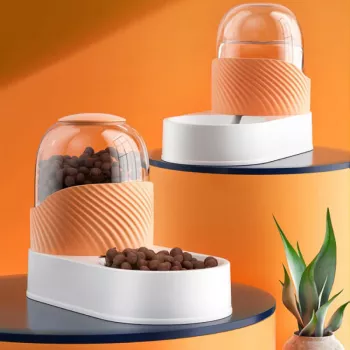
A dual automatic food-and-water station combines two essentials in one compact setup. Instead of measuring each meal or topping off multiple bowls, the unit uses separate reservoirs and gravity-assisted flow to replenish the bowls as your pet eats and drinks.
Capacity is the difference between “another refill tonight” and “still good for a while.” A 3.5L reservoir can help smooth out busy weeks, reduce bowl-empty surprises, and keep a more predictable routine—especially for pets that snack in small portions throughout the day.
| Pet type | Food/water needs (general) | How 3.5L can help |
|---|---|---|
| Adult cat | Small meals throughout the day; regular water access | Often reduces refill frequency and supports grazing behavior |
| Small dog | Portioned meals; steady water access | Helps keep water available and reduces daily top-ups |
| Two pets sharing | Higher combined consumption | May still reduce refills, but bowl level should be checked more often |
Gravity-style feeders are straightforward, but the details make a noticeable difference in daily use. When comparing options, focus on stability, cleanability, and how easy it is to confirm levels at a glance.
Water freshness matters, too. For general guidance on hydration needs, AAHA offers a helpful overview of typical water intake ranges and factors that can change them (activity, diet type, heat): AAHA: How much water should my pet drink?.
A good first setup helps prevent drips, stale water, and “why isn’t this flowing?” moments. Plan the placement like you would for a normal bowl—low-traffic, easy to clean, and away from heat.
For general best practices on cleaning pet items and reducing germ buildup, see: CDC: Cleaning and disinfecting pet supplies.
| Task | Suggested cadence | Why it helps |
|---|---|---|
| Rinse and refill water | Daily to every few days | Supports freshness and encourages hydration |
| Wash water bowl | Several times per week | Reduces slime and odor |
| Wipe food bowl area | Weekly (or as needed) | Keeps crumbs and oils from accumulating |
| Full disassembly and wash | Weekly to biweekly | Helps prevent residue in hidden areas |
Automatic Pet Food and Water Feeder with 3.5L Capacity is designed to reduce refill frequency while keeping food and water accessible. A single, compact station can help keep the feeding area organized compared to separate bowls, and it works well as an everyday convenience tool alongside routine pet care and regular bowl cleaning.
| Item | Detail |
|---|---|
| Product | Automatic Pet Food and Water Feeder with 3.5L Capacity |
| Capacity | 3.5L |
| Availability | In stock |
| Price | $51.32 USD |
It depends on your pet’s size, diet, and weather (pets often drink more in warm or dry conditions). To estimate, track how much food and water your pet uses per day for 3–5 days, then divide 3.5L by the daily average. Even with a large reservoir, the water level should still be checked daily.
It can help cover short periods, but it isn’t a substitute for pet supervision or regular check-ins. For longer stretches, arrange a caregiver visit, confirm the unit is stable on a level surface, and consider whether your pet tends to overeat or compete with other pets.
Wash the water bowl several times per week and refresh the water daily to every few days, depending on temperature and usage. Do a full disassembly and wash weekly or biweekly to reduce biofilm and residue; use mild soap and rinse thoroughly so no cleaner remains.






Leave a comment