

Stress can spike in minutes and linger for hours. The most effective relief often comes from small, repeatable actions: steady breathing, short meditations, grounding the senses, and organizing time so the day feels manageable again. The techniques below are designed for real life—desk, commute, home—so tension can drop quickly and stay lower.
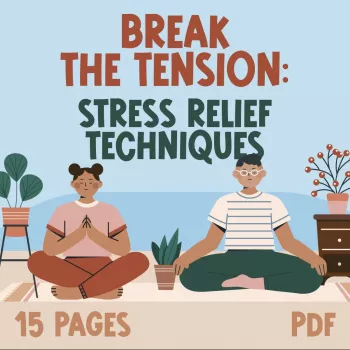
If you want a step-by-step guide you can keep open on your phone or laptop, Break the Tension: Stress Relief Techniques – Breathing Exercises, Quick Meditations, Grounding Techniques, and Time Management Tips to Reduce Stress pulls these tools into one easy reference.
Stress is easier to interrupt early—before it turns into an afternoon-long fog or a late-night spiral. Use these cues as a personal “check engine” light.
Jaw clenching, shallow breathing, tight shoulders, headaches, stomach fluttering, and restless legs often show up first. If you notice your breath getting high in the chest, treat that as a signal to slow down rather than powering through.
Racing thoughts, irritability, decision fatigue, catastrophizing, and difficulty focusing on one task are common. If every option feels urgent and nothing feels doable, it’s usually time for a reset, not more effort.
Scrolling to avoid tasks, snapping at others, skipping meals or water, and multitasking without progress are stress behaviors that feed more stress. The goal is not perfection—just catching the loop sooner.
Quick reset rule: if signs persist longer than 10 minutes, switch from “push through” to a 2–5 minute technique.
Breathing is one of the quickest ways to shift your nervous system. Keep it gentle: smooth, quiet breaths beat big, forced inhales.
Inhale through your nose, then “top it off” with a short second inhale. Exhale slowly through the mouth. Repeat 3–5 times to take the edge off a sudden stress spike.
Inhale for 4, hold for 4, exhale for 4, hold for 4. Keep your shoulders relaxed and your jaw unclenched. This one works well before meetings or difficult conversations.
Inhale for 4, exhale for 6–8. Lengthening the exhale helps reduce arousal and can feel especially supportive in the evening.
Inhale for 4, hold for 7, exhale for 8 for 2–4 cycles. If you feel lightheaded, stop and return to normal breathing.
Common mistakes: forcing big inhales, lifting shoulders, and speeding up. Aim for a steady, comfortable pace.
| Technique | How long | Best for | How to do it |
|---|---|---|---|
| Physiological sigh | 30–60 sec | Sudden spike of stress | Two-part inhale, long exhale, repeat 3–5 times |
| Box breathing | 2–4 min | Focus + steadying nerves | 4-4-4-4 count; keep pace gentle |
| Extended exhale | 2 min | Evening wind-down | Inhale 4, exhale 6–8 for 8–12 rounds |
| 4-7-8 | 1–2 min | Trouble settling | Inhale 4, hold 7, exhale 8 for 2–4 cycles |
Meditation doesn’t need a cushion or a silent room. Think “micro resets” that slide into the cracks of your day.
Set a 60-second timer. Feel the breath at the nostrils. When your mind wanders, label it “thinking” and return to the sensation of breathing.
Move attention from forehead to feet. At each area, soften on the exhale—like you’re letting tension drain downward.
Recognize (name the feeling), Allow it to be there, Investigate where it sits in the body, and Nurture with a simple kind phrase (for example: “This is hard, and I can take one step.”).
Walk slowly for the first minute. Notice 5 things you see, 4 you hear, and 3 you feel (shoes on the ground, air on skin, fabric on shoulders).
For a quick, portable reference you can revisit any time, keep Break the Tension: Stress Relief Techniques – Breathing Exercises, Quick Meditations, Grounding Techniques, and Time Management Tips to Reduce Stress handy.
Foundational supports can amplify the tools above: hydration, regular meals, caffeine timing, short movement breaks, and social support. For additional guidance, see resources from the American Psychological Association, Mayo Clinic, and Harvard Health.
The physiological sigh is one of the quickest options: inhale through the nose, take a short second inhale, then exhale slowly through the mouth for 3–5 rounds. Keep it smooth and comfortable rather than forcing a big breath.
Use them at the first signs of overwhelm, and also as a brief daily practice so they feel automatic when you need them. Pairing a 30–60 second grounding reset with a cue (like after opening email) helps it stick.
Simplify to one small next step, cap your must-do list at three items, and add buffers between commitments. If the plan feels heavy, scale it down until it feels workable, then build back gradually.









Leave a comment